
Crisis Intelligence · 2026-09-21
How Service Providers Can Communicate During Outages Without Losing Public Trust
A practical guide to monitoring public conversations and communicating clearly during internet, water, and emergency-service outages.
Executive Takeaway
FameSense turns fragmented public conversation into decision-ready reputation intelligence, so leaders can see material shifts early and respond with context.
An outage becomes a trust problem within minutes.
When people cannot connect to the internet, access water, or reach emergency services, they need more than an apology. They need to know what is affected, what to do, when the next update will arrive, and whether the organization understands the disruption.
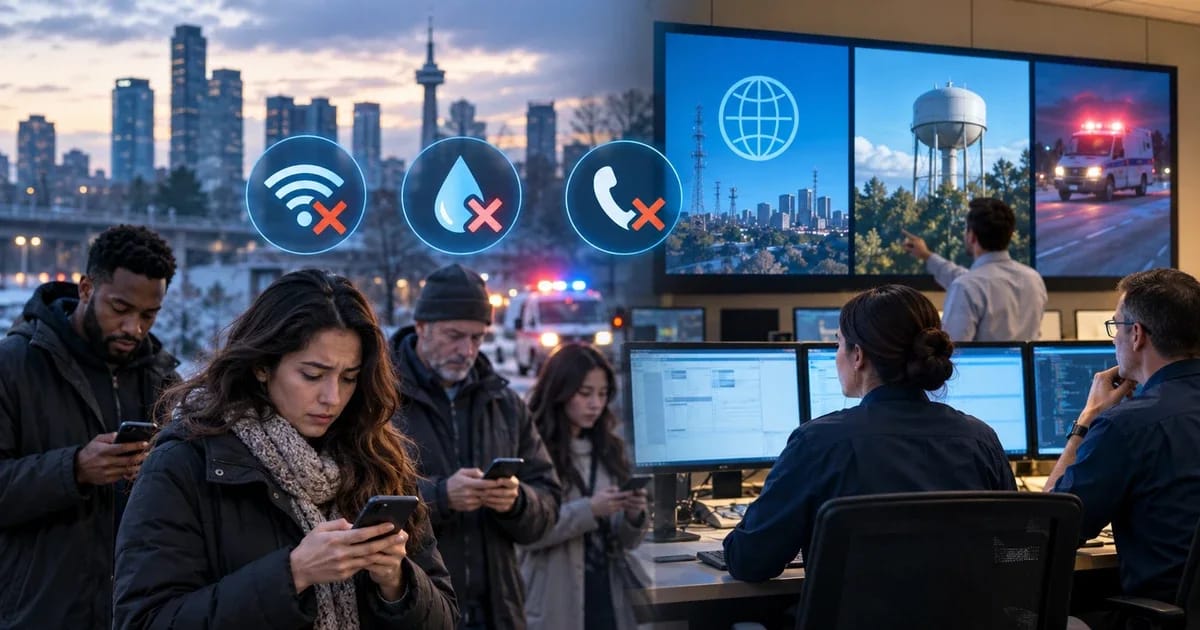
Recent events show why this matters. A provider in Eagle Mountain confirmed that ongoing internet outages were caused by a cyberattack. A separate 911 outage affected Ontario, Quebec, and four other provinces before services were restored. In Laredo, a proposed app would alert residents about water outages. These events differ, but the communication challenge is similar: uncertainty spreads faster than official information unless reliable updates are easy to find.
Service providers should monitor five signals together:
- Positive: People say alerts are useful, restoration information is clear, support is accessible, or the organization is taking visible action.
- Neutral: People ask when service will return, check whether their area is affected, or share information without expressing a clear opinion.
- Negative: People report repeated failures, missed warnings, vague explanations, inaccessible support, or conflicting messages.
- Competitor comparisons: People point to another provider, city, utility, or emergency service that communicated faster or offered more practical help.
- Influence: Local leaders, journalists, community groups, or widely shared firsthand reports are changing what others believe or do.
The goal is not to remove criticism. It is to make the response more accurate, useful, and accountable.
What is happening
The public experiences an outage as a changing situation. The affected area may expand or shrink, and a suspected cause may not be confirmed. Customers may also receive different information from a call center, status page, social account, and local official.
Create a shared operating picture with a live issue log containing:
- Location or service area
- Service affected
- Start time and latest status
- Severity and safety implications
- Confirmed facts and open questions
- Customer impact
- Workaround or alternate route
- Next update time
- Owner for the next action
For an internet outage, separate mobile, fixed broadband, business connectivity, and individual neighborhoods. For a water outage, distinguish no supply, low pressure, boil-water guidance, and areas awaiting confirmation. For an emergency-service disruption, clearly separate the affected call route from other available emergency instructions.
Do not wait for complete information before communicating. Publish what is confirmed, identify what is being investigated, and state when the next update will come. “We are investigating” is not enough. A useful version is: “Service is unavailable in these areas. Our teams are checking the cause. We have not confirmed a restoration time. The next update will be posted at 3 p.m.”
The FameSense platform can support a structured view of incoming conversation, but someone must own the facts, update schedule, and handoff between operations and communications.
Why people are reacting
An outage removes control from everyday life. A customer without internet may be unable to work, study, pay a bill, or contact family. A water outage affects cooking, hygiene, businesses, and vulnerable residents. A 911 disruption raises an immediate question about how to get help. Even when the technical failure is outside a provider’s control, the provider controls much of the information experience.
Four frustrations usually appear together:
Uncertainty: People do not know whether they are affected, how long the outage will last, or whether a post is current.
Inconvenience: A general statement may be accurate but fail to provide a working contact method, public facility, alternate route, or local update.
Perceived unfairness: People may believe their neighborhood was warned or restored later, or ignored while another area received attention.
Loss of confidence: Conflicting messages make later promises less credible. If one channel says service is restored while customers remain offline, the gap suggests the organization does not understand its own incident.
Tone cannot compensate for missing information. “We apologize for the inconvenience” may be appropriate, but it should be followed by practical details. People need to see that the organization recognizes the impact and is reducing it.
Accessibility is part of the response. Use plain language, readable formatting, captions where needed, and channels that remain available when the primary service is down. If the outage affects communication itself, provide alternative ways to receive updates.
Avoid premature blame. In the Eagle Mountain incident, the provider confirmed a cyberattack-linked cause, but organizations should not speculate about responsibility or technical details before they are verified. Early accuracy is more valuable than an explanation that later changes.
What the conversation may mean
Outage conversation contains different signals that require different responses.
Positive signals show which practices help. A resident may thank a provider for a neighborhood-specific alert, or a community group may share an alternate support route. These signals identify useful practices but do not prove the incident is resolved.
Neutral signals often have urgent operational value. “Is this affecting Eastside?” “Do I still call this number?” and “When is the next update?” are questions, not approval or anger. Group them by location, service, and urgency. A rise in the same question may show that an announcement omitted a key detail.
Negative signals identify experience and communication failures. Separate “service is still down” from “your update is vague.” The first may require operational escalation; the second may require a clearer explanation, map, or update schedule.
Competitor comparisons describe a standard people now expect. If residents compare a provider with a utility, city, or emergency service that offered faster alerts, examine what it did better: earlier notification, precise geography, a working hotline, regular timestamps, or clearer guidance. Do not attack the comparison.
Influence signals show where information travels. A local journalist, neighborhood administrator, elected representative, hospital, school, or business association may reach people the provider cannot. Track what they share and provide verified, shareable updates. Never pressure them to remove criticism.
Tag each item as:
- A fact to verify
- A question to answer
- A safety or access concern
- A repeated experience problem
- A comparison worth learning from
- A high-reach conversation requiring clarification
This turns posts into decisions without reducing people to a sentiment score.
What makes it spread or settle
Outage conversations spread when people cannot find a dependable answer. Repeated unanswered questions can create a second incident: an information failure.
Conversation accelerates when:
- The outage affects a basic or safety-related service.
- The affected area is unclear.
- Updates use broad language without times or locations.
- The promised next update does not arrive.
- Different channels disagree.
- Customers have no visible workaround.
- A credible local account reports harm or confusion.
- Service returns for some people but not others without explanation.
Conversation can settle before the technical issue is fully resolved when people know what is happening and what to do. This requires a consistent cadence, not constant posting.
Use this update structure:
Current status: What service is affected, and where?
Known impact: Who may be unable to use it, and what should they expect?
Action underway: What teams are doing now, without unnecessary technical detail?
Customer action: What should people do, avoid, or use instead?
Unknowns: What has not been confirmed?
Next update: Give a specific time or condition.
Timestamp every update and keep the original post available. Correct errors plainly rather than quietly editing important facts. If a restoration estimate changes, explain that it changed and why.
A calm tone helps, but calm does not mean minimizing. Say what people can observe. After restoration, confirm whether it is complete or gradual, explain how to report remaining problems, and state what happens next. A post-incident review should cover the verified cause, corrective action, and the next public update if the investigation continues.
What to do now
Create a response cell with operations, customer support, communications, relevant local or public-sector contacts, and an accountable incident lead. Give one person authority to approve the confirmed status and another responsibility for maintaining the public update schedule.
1. Verify the first public facts
Confirm the affected service, locations, start time, known safety issues, and available alternatives. Label unconfirmed information clearly. Do not publish a cause simply because it is being discussed publicly.
2. Publish a first useful update
The first notice should answer basic questions even when some answers are incomplete:
We are aware of an outage affecting [service] in [area], beginning at approximately [time]. Our teams are investigating. [Available guidance or alternate route]. We have not confirmed a restoration time. The next update will be posted at [time].
Adapt the wording to the service. Emergency-service incidents require especially clear alternate instructions from responsible authorities. Do not improvise safety guidance.
3. Establish the cadence
Choose an interval the team can maintain. If conditions change quickly, update more often. If there is no material change, say so at the promised time. “No change since the last update; investigation continues” is better than silence.
4. Make information travel
Use the status page, social channels, email or text alerts where available, customer support scripts, local partners, and accessible formats. Keep the same facts across channels. If one channel is unavailable, prioritize alternatives.
5. Route questions to owners
Group conversation by area, service, urgency, and signal type. Send safety concerns and vulnerable-customer issues to the appropriate operational owner. Give support staff approved language and a way to report new patterns to the incident lead.
6. Close the loop
At restoration, state what has returned and what has not. Provide a route for remaining issues. Later, share the verified cause, corrective actions, and lessons that affect customers. If the review continues, give a date for the next update.
For organizations building a repeatable process, the FameSense customer examples can help frame how monitoring fits into response work. During a live incident, the priority is accurate information, useful action, and visible follow-through.
What to monitor next
Monitoring should continue after the first announcement and after service returns. The most important change may be a shift in what people ask, not a rise in negative posts.
Watch for:
Sources
Keep reading
Related articles
Crisis Intelligence
When a Customer-Service Reply Goes Viral: A Practical Recovery Playbook
8 min read
Crisis Intelligence
How to Communicate Clearly During a Service Outage
7 min read
Reputation Intelligence
How to Check What AI Platforms Say About Your Brand—and Improve the Experience Behind It
8 min read